Alignment is a bit ass
When it comes to developing PCs, alignment in D&D does not guide action nor does it provide meaningful information about moral values and beliefs. The terms used in alignment are either evaluatively or descriptively thin. Whatever your alignment, something else is doing the work of providing information or providing guidance regarding a character’s behaviour. That additional information might be moral codes, legal codes, previous actions like promises or oaths.
Virtues and Vices however, are meaningful terms that can serve as touch stones for characters to gauge how their characters might react in game. They provide reasons to act, and descriptive connections to the world that convert psychological reasoning into role-playing behaviour.
Vices and virtues additionally lend themselves to change as characters do; courage can become rashness or cowardice and greed can become generosity.
Virtues and Vices
The Virtues
Positive character traits that contribute to human flourishing, ethical behaviour, and community trust.
- Courage: Standing up for convictions and facing fears; the balance between cowardice (deficiency) and rashness (excess).
- Temperance (Moderation): Practicing self-restraint and balance; the mean between overindulgence and insensibility.
- Justice: Acting with fairness, equity, and respect for the rights of others.
- Wisdom/Prudence: Exercising good judgment, critical thinking, and foresight in making moral decisions.
- Generosity: Giving time, resources, or attention without being careless; the balance between stinginess and wastefulness.
- Honesty: Communicating and acting truthfully with genuine care for others; countering deceit or hypocrisy.
- Compassion/Kindness: Showing empathy and actively caring for the well-being and suffering of others.
The Vices
Destructive or corrupting patterns of behaviour that lead to personal regret, harm to others, and moral stagnation.
- Pride: An excessive sense of one's own worth or self-importance. (Countered by Humility).
- Greed: An intense, selfish desire for wealth, status, or material gain. (Countered by Generosity/Charity).
- Wrath: Uncontrolled anger, resentment, or desire for revenge. (Countered by Patience/Forgiveness).
- Lust: An overwhelming, selfish desire, often regarding physical pleasure. (Countered by Chastity/Self-Control).
- Envy: Resentment of someone else's traits, status, or possessions. (Countered by Gratitude/Kindness).
- Gluttony: Habitual overindulgence or excessive consumption. (Countered by Temperance).
- Sloth: Laziness, apathy, or the avoidance of effort and diligence. (Countered by Diligence).
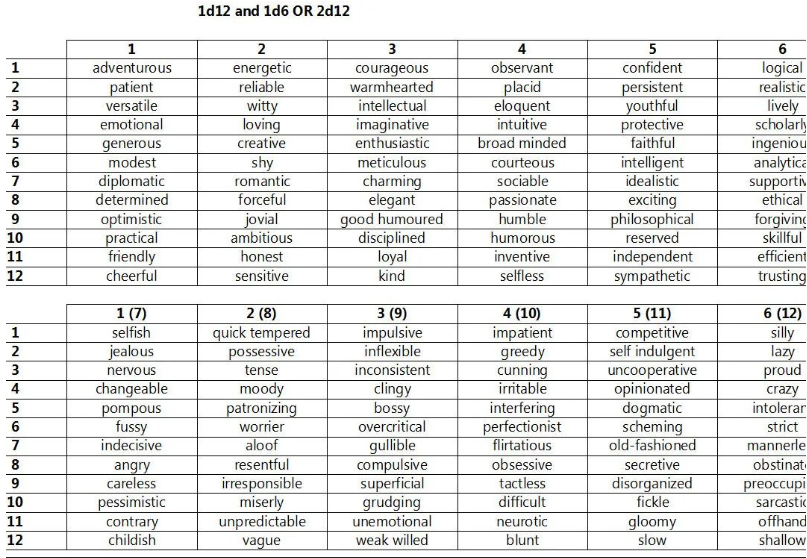
Character Traits Reference Table
References
https://works.hcommons.org/records/2frsf-vn650
https://www.youtube.com/watch?v=2kBsKC6xeiQ